
Email us at info@redlinebuilding.co.uk or Call on 020 7183 1053
A commercial refurbishment in London can cost approximately £40 to over £250 per sq ft, depending on the building’s condition, project scope and specification. Basic cosmetic improvements generally cost less than a complete commercial renovation involving structural alterations, new electrical systems, HVAC upgrades and bespoke interior finishes.
For businesses and commercial property owners in East London, understanding the cost to refurbish commercial property is essential before committing to construction. Office spaces, retail premises and other commercial buildings have different requirements, meaning refurbishment costs can vary considerably between properties of a similar size.
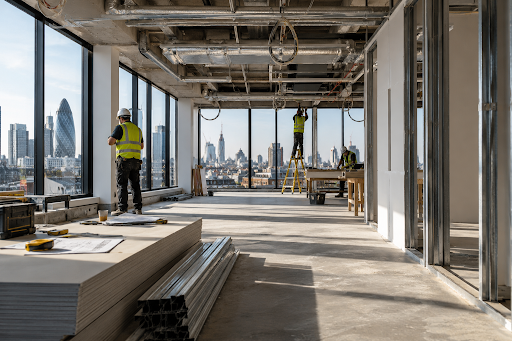
A successful refurbishment begins with a clear understanding of the existing building and the improvements required. Redline Building Services’ commercial construction and refurbishment services provide a starting point for businesses considering how to upgrade their premises.
This guide explains commercial refurbishment costs in London, the factors influencing pricing, typical project timescales and how to establish a realistic refurbishment budget.
Commercial refurbishment costs in London can range from approximately £40–£60 per sq ft for cosmetic improvements to more than £250 per sq ft for premium projects. The final construction cost depends on the size of the commercial building, the extent of the work and whether the project involves targeted upgrades or a complete strip-out and refit.
The following figures are indicative budgeting estimates rather than fixed contractor prices.
Refurbishment Type | Estimated Cost Per Square Foot |
Basic cosmetic refurbishment | £40–£60 |
Mid-range commercial refurbishment | £60–£100 |
Comprehensive commercial renovation | £100–£150 |
Premium commercial refurbishment | £150–£250+ |
A basic refurbishment might involve repainting walls, replacing flooring and improving lighting. Mid-range projects may include changes to the office layout, meeting rooms, storage solutions and collaboration spaces.
Premium commercial renovations can involve bespoke joinery, specialist finishes, air conditioning, structural alterations and substantial upgrades to mechanical and electrical systems. Analysis of the fit-out sector examines how changing workplace expectations and environmental considerations are influencing investment in existing commercial buildings.
These figures should be used for initial budget planning. A detailed specification and site assessment are necessary to establish the actual cost of an individual project.
The cost to refurbish commercial property depends on its size, condition and intended use. A 5,000 sq ft commercial building in London could require approximately £200,000 for a basic refurbishment, while a comprehensive renovation could cost between £500,000 and £750,000 or more.
For example, a 5,000 sq ft office refurbishment at £75 per sq ft would produce an estimated base construction cost of £375,000.
However, this figure may not include professional fees, office furniture, IT infrastructure, VAT or contingency allowances.
A complete commercial renovation involving structural changes, upgraded building services and high-specification finishes will generally cost more than a refurbishment that retains existing layouts and infrastructure.
The most reliable way to estimate commercial renovation cost is to establish the project scope before requesting detailed quotations.
Commercial renovation costs are influenced by the existing building’s condition, project size, internal layout, specification and accessibility. Each factor affects the labour, materials, specialist services and time required to complete the refurbishment.
Older commercial buildings may require more extensive refurbishment work than modern properties.
Outdated electrical systems, ageing plumbing, inefficient HVAC systems and damaged internal finishes can increase construction costs. Structural alterations may also be necessary before the new office layout or commercial interior can be installed.
Asbestos-containing materials can create additional complications in older buildings. An appropriate survey may be required before intrusive refurbishment work begins, with specialist management or removal necessary where asbestos is identified.
Early site visits help identify these issues before the refurbishment budget is finalised.
The size of a commercial building directly affects the total refurbishment cost, but the internal layout can be equally important.
Open-plan offices may require fewer partitions than workplaces containing multiple meeting rooms, private offices and collaboration spaces.
Retail premises can involve different requirements, including customer-facing finishes, specialist lighting and storage solutions. Commercial buildings spanning multiple floors may also require more complex project management and delivery arrangements.
Effective space planning helps businesses improve the functionality of existing premises without introducing unnecessary building work.
Mechanical and electrical services can represent a substantial proportion of a commercial refurbishment budget.
Air conditioning, ventilation, lighting, fire safety systems, access control, security systems and data cabling all need to support the intended use of the refurbished space.
Costs rise when existing systems are unsuitable for the proposed layout or require complete replacement.
For example, upgrading HVAC systems throughout an entire office will generally cost more than retaining serviceable equipment and making targeted improvements.
The quality of materials, furniture and finishes can significantly influence commercial refurbishment costs.
A cost-effective workplace upgrade may retain existing office furniture while introducing new flooring, improved lighting and updated decoration.
Premium projects may incorporate bespoke reception desks, specialist wall finishes, integrated storage, acoustic meeting rooms and feature lighting.
Choosing durable materials that balance appearance, maintenance and long-term performance can help businesses manage both initial and ongoing property costs.
Commercial refurbishment improves an existing workspace or building, while an office fit-out typically transforms an unfinished or partially finished commercial interior into a functional workplace.
An office refurbishment project might involve replacing flooring, upgrading lighting, reconfiguring meeting rooms and improving the existing office layout.
An office fit-out may involve converting a Cat A commercial space into a Cat B workplace containing desks, partitions, collaboration spaces, meeting rooms and IT infrastructure.
A complete strip-out and refit involves removing substantial elements of the existing interior before installing a new layout and building services.
Understanding whether your project requires refurbishment, reconfiguration or a complete fit-out helps establish a more accurate construction budget.
Professional fees, specialist surveys, compliance requirements and contingency allowances can increase the total cost to refurbish commercial property beyond the initial construction quotation.
For early budget planning, businesses may allow approximately 10–15% for professional services and a further 10–20% for contingency. The appropriate allowances depend on the project’s complexity and should be confirmed during cost planning.
Professional fees may include architects, structural engineers, building services consultants, quantity surveyors and project management.
Other potential expenses include asbestos surveys, waste disposal, landlord approvals, temporary accommodation and additional electrical or structural work identified during construction.
A structured approach to whole-life costing and construction cost planning can also help property owners consider future maintenance and replacement requirements alongside initial refurbishment expenditure.
VAT is another important consideration. Most standard-rated commercial refurbishment work is subject to 20% VAT, although recovery depends on the business’s tax position.
A detailed quotation should identify which services are included in the construction cost and distinguish confirmed prices from provisional sums and exclusions.
Commercial refurbishment costs in East London can be influenced by restricted building access, older properties, delivery limitations and the challenges of completing construction work in occupied buildings.
Commercial premises in Shoreditch, Hackney, Stratford and surrounding areas vary considerably in age, construction and internal configuration.
Converted warehouses and older office buildings may require substantial upgrades to electrical infrastructure, ventilation and internal layouts.
Restricted access roads, limited loading facilities and delivery restrictions can also increase labour requirements and complicate project delivery.
Understanding these practical considerations before construction begins can help reduce unexpected costs and delays.
A relatively straightforward commercial refurbishment may take approximately 8–12 weeks on site, while larger projects involving structural alterations, multiple floors or extensive building services upgrades can take several months.
The final programme depends on the refurbishment scope, design approvals, material availability and whether the building must remain operational during construction.
Occupied buildings often require phased delivery to minimise disruption to business operations.
Instead of closing an entire office or commercial property, contractors may complete refurbishment work in separate areas while other parts of the building remain operational.
This approach can reduce disruption but may increase labour costs and extend the construction programme.
Temporary partitions, additional safety measures and restricted working hours may also be necessary.
An empty commercial building generally provides greater flexibility for construction work.
Contractors can often coordinate strip-out, electrical installation, flooring and decorating more efficiently without employees or customers occupying the space.
However, vacant properties may still require building regulations approval, landlord consent or specialist surveys before refurbishment begins.
The most effective way to reduce the cost to refurbish commercial property is to establish a clear project scope before construction begins. Retaining serviceable building systems, reusing existing furniture and avoiding unnecessary structural alterations can all help control expenditure.
A well-executed commercial refurbishment does not necessarily require replacing every element of the building.
Early space planning also helps businesses distinguish essential improvements from optional design features.
Comparing contractor quotations against the same specification makes it easier to identify genuine price differences. A detailed quotation should explain the refurbishment work included, project stages, materials, exclusions and payment terms.
This reduces the risk of selecting a lower initial quote that later increases because important elements were omitted.
Commercial refurbishment projects do not always require planning permission, particularly when the work involves internal cosmetic improvements. However, external alterations, changes of use and certain structural works may require additional approvals.
Building regulations approval may also be necessary for structural changes, fire safety improvements, electrical installations and other regulated construction work.
Listed buildings can require listed building consent where proposed alterations affect their special architectural or historic interest.
For projects involving multiple contractors, the Construction (Design and Management) Regulations 2015 establish requirements for appropriate project management and health and safety appointments.
Identifying these requirements before refurbishment work begins helps reduce delivery risk and avoid unnecessary delays.
Choosing a commercial refurbishment contractor involves assessing relevant project experience, technical capabilities, pricing transparency and the ability to coordinate specialist trades.
Before appointing a contractor, arrange site visits and provide a detailed project brief outlining the existing building, required layout, building services and intended completion date.
Ask how the contractor manages subcontractors, unforeseen building conditions and changes to the construction programme.
For larger commercial renovation projects, coordinated project management can reduce the complications associated with appointing several separate contractors.
A clear contract should establish the agreed scope, payment schedule, responsibilities and procedures for managing variations.
Commercial refurbishment costs in London vary considerably, with indicative construction budgets ranging from approximately £40 per sq ft for basic improvements to more than £250 per sq ft for premium commercial renovations.
The total cost to refurbish commercial property depends on the building’s condition, size, specification, structural requirements and existing services. Professional fees, compliance requirements and contingency allowances should also be considered when establishing the overall refurbishment budget.
For businesses in East London, careful planning and a realistic understanding of commercial renovation costs can help deliver a functional, modern commercial space while avoiding unnecessary expenditure.
If you’re considering upgrading your commercial premises, Redline Building Services’ commercial refurbishment services in London provide a starting point for planning your project. From office reconfiguration and new flooring to partitions, air conditioning and bespoke interiors, a carefully planned refurbishment can create a functional commercial environment that supports your business’s long-term requirements.